The contract is what everything else rests on. It sets how long the relationship lasts, how much the player earns and what happens in particular cases: a transfer, a relegation, a target met. Understanding its structure explains nearly every transfer story, including why an outstanding player is sometimes sold cheaply.
In short#
- A contract has four parts: length, fixed pay, variable pay and clauses.
- The length determines both sides’ bargaining power.
- The nearer the expiry, the less the player is worth to the selling club.
- On the final day the value is zero: the player is free.
- A release clause fixes the figure at which the club must sell.
- Bonuses tie part of the pay to measurable targets.
- A sell-on percentage follows the player after he has been sold.
What a professional contract is#
A professional footballer is an employee of the club he plays for. The contract binding them is an employment contract with particular features, governed both by general law and by sporting regulations.
The main difference from an ordinary job is that it always has a fixed term. There are no permanent contracts: there is a start date and an expiry date, and at expiry the relationship ends without any further act.
The second difference is that it cannot be broken freely. A player cannot simply decide to leave, nor can the club dismiss him at will. That is why a transfer requires an agreement between the two clubs, as explained in how the transfer market works.
The four parts of a contract#
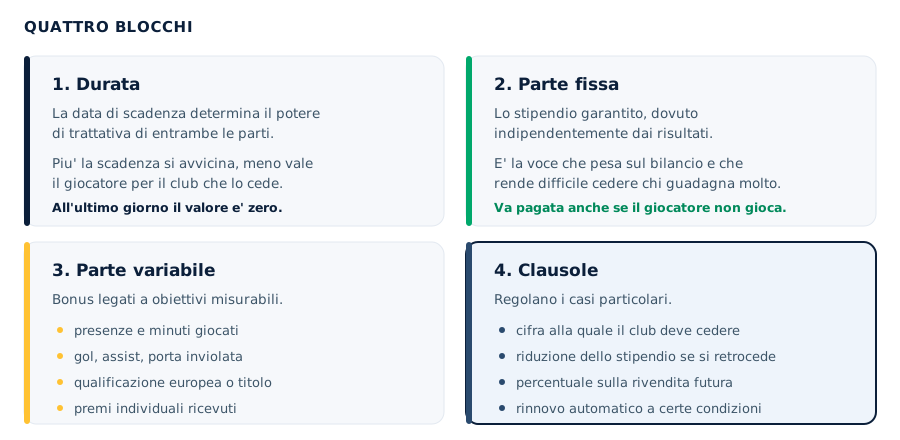
| Part | What it sets | Who it protects | Effect on the market |
|---|---|---|---|
| Length | The expiry date of the relationship | Both | Determines the transfer value |
| Fixed pay | Guaranteed wages | The player | Makes high earners hard to move on |
| Variable pay | Bonuses tied to targets | The club | Shifts cost onto results achieved |
| Clauses | What happens in particular cases | Depends on the clause | Fixes prices and conditions in advance |
The length#
The international regulations cap a professional contract at five years. For players under eighteen the limit falls to three. Those thresholds exist to avoid ties so long that they would unduly restrict a player’s freedom.
The fixed pay#
This is the guaranteed salary, due regardless of how often the player appears. It is also what makes high earners hard to move on: no club wants to inherit wages out of scale with its own budget.
The variable pay#
These are bonuses tied to measurable targets: appearances, minutes played, goals, assists, clean sheets, European qualification, titles won, individual honours of the kind described in individual awards.
They serve two purposes. They reduce the club’s risk, since it pays more only if the performance is there, and they allow a high headline figure without inflating the guaranteed cost.
Why the expiry date matters most#
The expiry date is the variable that governs every decision. A club can demand a fee only because the contract is still running, and the shorter that contract gets, the less it can ask.
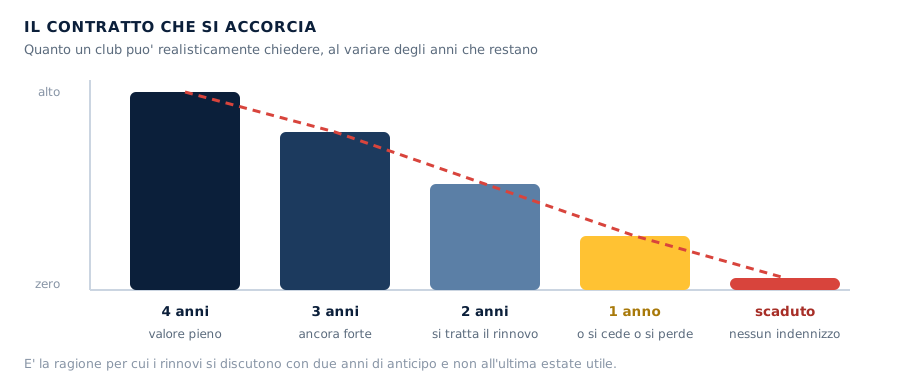
With four years ahead the club is in a strong position: it can refuse any offer and wait. With one year the position reverses. The player knows he can reach expiry and leave with nobody receiving anything, and can turn down any destination.
From this come situations that look irrational and are not. A club selling an outstanding player cheaply has not botched the negotiation. It has chosen to bank something rather than lose him for nothing months later, as the section on free transfers in types of transfer explains.
The most common clauses#
The release clause#
The best known and the most misunderstood. It sets a figure at which the club is obliged to accept a sale, with no right of refusal.
It is not a suggested price but an obligation: whoever pays that sum acquires the right to negotiate directly with the player. His agreement is still required, and he can decide to stay.
In some countries the clause is compulsory by law in every professional contract, as in the Spanish league. In Serie A, the Premier League and the other European leagues it is optional. It can also be tiered: one figure abroad, another for clubs in the same league, or valid only in a specific window.
Clauses tied to the division#
These provide for an automatic change in wages when a sporting event occurs. The most common is a reduction on relegation, which aligns the cost to the new division without renegotiation.
The opposite version also exists: an increase on promotion or on reaching the competitions described in European qualification. Without such clauses a relegated club would be left with a wage bill calibrated on revenue it no longer has.
The sell-on percentage#
The selling club retains a share of any future sale of the same player. If the buying club sells him on, it must pay that percentage to whoever sold him.
It is how a lower-division club shares in the value of a youngster it developed. A club in Serie B or Serie C can accept a modest fee now in exchange for a share of whatever happens later.
Automatic renewal#
This extends the contract once a condition is met: a number of appearances, survival in the division, a team target reached. It stops a player who has become important reaching expiry without anyone reopening the discussion.
The less familiar clauses#
Alongside the four main ones are others, less reported but common in real contracts.
- The signing bonus. A sum paid on agreement, separate from wages and often spread over the years of the deal.
- The fixed-date exit clause. Valid only in a specific window and at an agreed figure, then it lapses.
- The right of first refusal. The original club gets priority if the player is put back on the market.
- The anti-rival premium. A surcharge due if the sale is to a club in the same league or the same city.
None of these is compulsory. They appear when one side has enough bargaining power to insist. It is why the contracts of the most sought-after players are far longer than everyone else’s.
How a renewal is negotiated#
A renewal is the most delicate negotiation of all, because it takes place between two parties who have to keep working together whatever the outcome. Four variables are on the table.
- The length. The club wants it long to rebuild transfer value, the player wants it short enough to renegotiate when he is at his peak.
- The fixed pay. The part the player cares about most, because it depends on nothing.
- The bonuses. The ground for compromise: the club offers high figures conditional on targets.
- The clauses. A high release clause protects the club, a low one protects a player who wants to be able to leave.
When the talks happen matters as much as their content. A renewal discussed with three years still to run closes on very different terms from one discussed eight months from expiry, when the club has no alternatives left.
The calendar weighs in the background too. A player out of contract about to play at the World Cup or the European Championship has reason to wait, because a strong tournament can transform the offers. The same applies to anyone chasing one of the honours described in individual awards.
Renewal, termination and free agency#
A contract can end in three ways, with very different consequences.
- Renewal. The parties agree new terms before expiry. It is the outcome the club prefers, because it restores the transfer value.
- Consensual termination. Club and player agree to end the relationship early, usually with a severance sum. The player becomes free and can sign elsewhere even outside the transfer windows.
- Natural expiry. The contract runs out and ends. The player is free and the club receives nothing.
There is also termination for just cause, when one side fails to meet its obligations. It is the most contentious route and almost always ends before the sporting judicial bodies, which assess whether the cause was genuinely just and who is owed compensation.
What a contract cannot contain#
Freedom of negotiation has firm limits, and some terms are void even if both parties signed them.
- Lengths beyond the cap. Five years for adults, three for minors.
- Assignment of rights to third parties. Funds or parties outside the clubs cannot hold shares in a player’s economic rights.
- Restrictions on freedom at expiry. No clause can stop a player choosing where to go once free.
- Pay below the minimum. Collective agreements set floors by division, and a worse deal is not valid.
There are also limits on clauses barring a player on loan from facing his parent club, which some federations consider damaging to the integrity of the competition. The loan formats they apply to are described in types of transfer.
The contract and the rest of the system#
A contract is not an isolated document: it interlocks with the other rules of football, and every interlock has practical effects.
With the windows, because a contract terminated mid-season frees the player even with the market shut, as described in transfer windows.
With the squad lists, because a player under contract but off the list still costs money while being unable to play. It is one of the hardest situations for a club to resolve.
With the financial rules, because the total wage bill counts towards spending limits. A heavy contract signed today shapes the transfer business of three summers to come, as explained in how the transfer market works.
With the competitions, because many bonuses depend on sporting milestones: qualification for the Champions League, a finishing position in Serie A, promotion from Serie B.
Reading a contract from the outside#
Contract terms are rarely published, and what circulates comes from people with an interest in how it is presented. Three cautions help.
Reported wages may be gross or net, and the difference is large. The same figure can describe two very different agreements depending on which is meant, and tax treatment varies from country to country.
Headline totals often bundle the fixed pay with bonuses that may never be earned. A contract described as worth a certain amount per season is usually worth that only in the best case.
Release clauses are announced more often than they are used. A figure set deliberately high exists to discourage offers, not to invite them, and its presence says little about whether a club wants to sell.
Frequently asked questions#
How long can a football contract last?#
Five years at most for an adult player, three for a minor. These are limits set by the international regulations and apply across all affiliated federations.
They exist to avoid ties so long they would unduly restrict a player’s freedom. A contract longer than those terms is not valid in the excess part.
What is a release clause?#
It is a figure at which the club is obliged to accept a sale. It cannot refuse: whoever pays that sum acquires the right to negotiate directly with the player.
The player’s agreement is still needed, and he can always decide to stay. The clause binds the club, not the player, which is why it is sometimes paid without the transfer going through.
Why is a strong player sold cheaply?#
Almost always because the contract is running out. A year from expiry the club can only choose between banking something now and losing him for nothing months later.
It is not a negotiating error but arithmetic. Transfer value depends on how much contract remains, and at expiry it is zero, as described in types of transfer.
Do wages change if the club is relegated?#
If the contract provides for it, yes. Clauses tied to the division automatically cut pay on relegation, aligning it to the revenue of the new tier.
Without them a relegated club would be left with a wage bill calibrated on income it no longer has. The opposite version also exists, with rises on promotion or European qualification.
What is a sell-on percentage?#
It is a share the selling club retains on any future sale of the same player. If the buyer sells him on, it must pay that percentage to the original club.
It is how a lower-division club shares in the value of a youngster it developed. It allows a modest fee to be accepted now in exchange for a share of whatever comes later.
Can a player terminate whenever he wants?#
No. The contract binds both sides until expiry, and early termination requires either mutual agreement or a just cause recognised by the sporting judicial bodies.
The route commonly used is consensual termination, usually accompanied by a severance sum. Once the contract is ended the player is free and can sign elsewhere even with the market shut.
What are contract bonuses?#
They are sums tied to measurable targets: appearances, minutes played, goals, assists, clean sheets, qualification for the European competitions or winning a title.
They reduce the club’s risk, since it pays more only if the performance is there, and allow a high headline figure without inflating the guaranteed cost. Some are tied to the honours described in individual awards.
Are contract rules the same in every country?#
The international limits are common: maximum length, ban on third-party ownership, freedom at expiry. They apply in Serie A as in the Premier League and the other European leagues.
National rules differ. In some countries a release clause is compulsory in every contract, in others optional, and collective agreements set different minimum wages by division.